


In this article
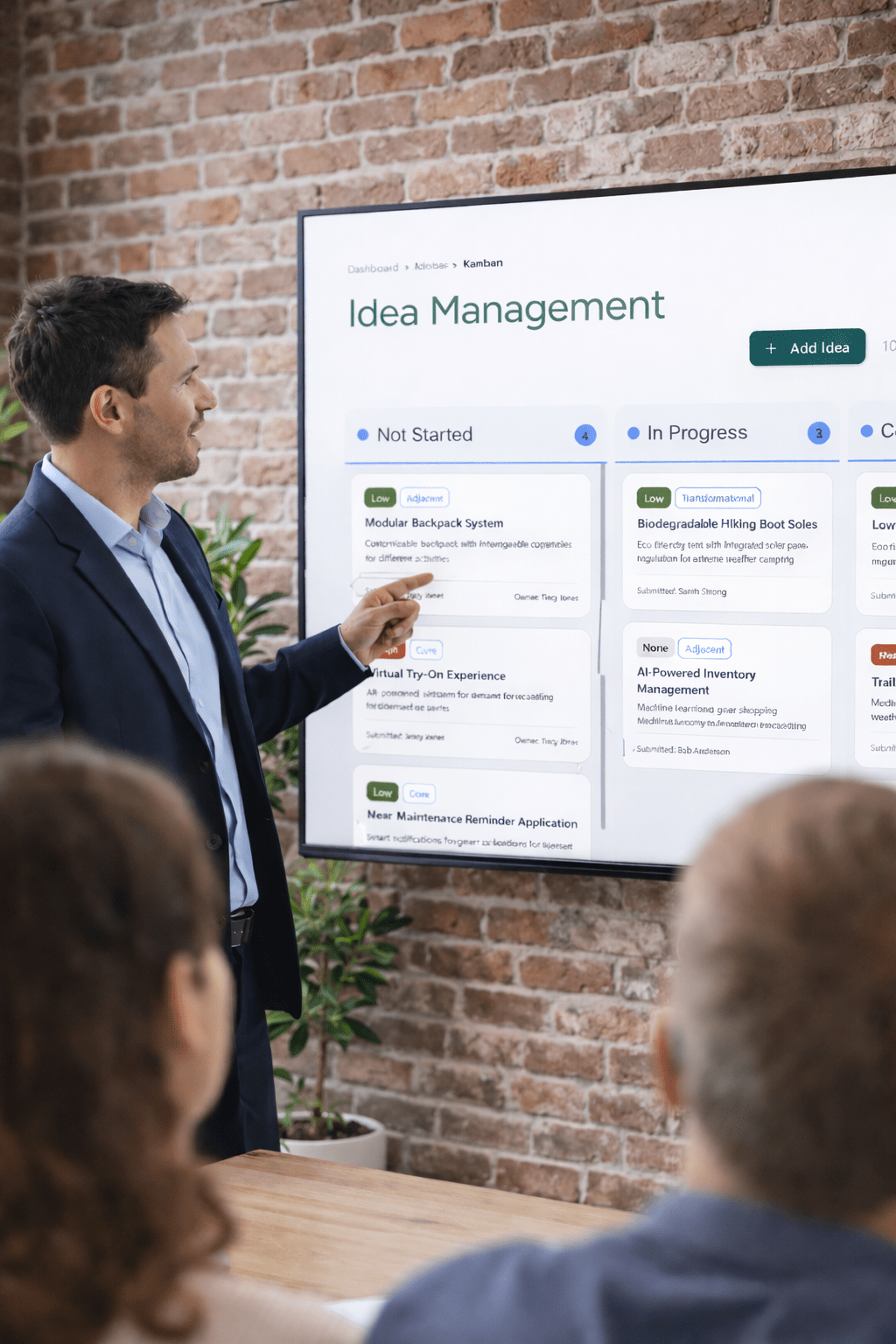
Idea Management Software
KWOKKA by UBT™ collects ideas from employees across your organization and gives each one an owner and a defined path.
Book a WalkthroughKey takeaways
Decide when to stop a project before it starts: agree the kill criteria at approval.
Review every project on a fixed date, against evidence the owner brings.
End each review with one of three outcomes: stop, pause or scale.
Treat a stop made on evidence as a sound decision, and thank the team that brought the evidence.
Record what was learned, and move the time to stronger work.
When to Stop a Project: Decide Before It Starts

Definition
Kill criteria
Conditions agreed before a project starts that say when it will be stopped: the evidence that must be seen by a set date, and the limits on time or cost that must not be passed.
The question of when to stop a project is usually asked too late, after months of slow progress and status reports that still say “on track”. By then the people involved have a stake in continuing, and no agreed test exists. The decision is easier and fairer when the conditions for stopping are written down before the work begins.
Stalled work that no one closes is common. A survey of 8,000 office workers, published in January 2026, found:
44%
of office workers started 2026 with projects that were at a standstill and still counted as active
1 in 3
or more of the employees surveyed fear that ending a project will be seen negatively
Source: Atlassian with Censuswide, survey of 8,000 office workers, January 2026
In innovation and improvement work the outcome is uncertain, so stopping is a normal result of testing an idea. The practices below make it routine.
Why Stalled Projects Stay Open
Projects are started by a decision and, in most organizations, ended only by completion. No one has the task of deciding when to stop a project that will not finish. Three forces keep them open:
Money already spent. The budget and effort used so far feel like a reason to continue, although they cannot be recovered either way.
Reputation. The sponsor argued for the project. Closing it can look like an admission of poor judgment.
No agreed test. Without a condition set in advance, every review is a debate between opinions, and the easiest outcome is to continue.
We call the result zombie projects: work that has stopped moving and remains on the list. Stronger projects pay the cost, because they depend on the same people. When employees say there are too many projects at work, this is often the cause: the list grows with every approval, and nothing leaves it.
Set Project Kill Criteria at Approval
Most advice on when to kill a project lists warning signs to watch for during the work. Those signs are read by people who already want the project to continue. The better time to decide when to stop a project is at approval, when no one is yet attached to the work and the conditions can become part of the plan.
Innovation and improvement projects usually need three kinds of criteria:
Evidence
What Must Be Shown
A result the project must produce by a set date, such as a measured saving at one site.
Limits
What Must Not Be Passed
A ceiling on time, cost or people. When it is reached without the evidence, the project returns for a decision.
Fit
What Must Stay True
The conditions that justified the project: the strategy it supports, the need it meets, the sponsor. If one changes, the case is reviewed.

In practice. Write each criterion as one sentence: “If we have not seen [evidence] by [date], we stop.” Record it in the approval document, beside the owner’s name and the review date.
How to Write Kill Criteria People Will Act On
A criterion works only if two people who read it on the review date reach the same conclusion. These examples show the difference:
Instead of
Stop if the pilot does not go well
Review progress when there is time
Stop if the costs get too high
Try this
Stop if fewer than 30 of the 100 pilot users return in week four
Review on the first Tuesday of the third month
Return for a decision when spending reaches the agreed ceiling
Keep the list short: two or three criteria for each project, each with a named person who will bring the evidence.
Review on a Fixed Date, Against Evidence
Kill criteria have no effect unless someone checks them. Set the review date at approval and put it in the calendar: every four to six weeks for a short test, and at the end of each stage for a longer project.
Regular reviews are uncommon. In a June 2024 survey by the project management author Antonio Nieto-Rodriguez, reported by HR Executive, only 8% of organizations reviewed their projects monthly, and 7% never stopped a project.
The review is the meeting where the organization decides when to stop a project, so it follows the same order each time:
1
Bring the evidence
The owner presents what was measured against each criterion. Results are kept separate from opinions and forecasts.
2
Compare it with the criteria
The reviewers read the conditions agreed at approval and state whether each one has been met.
3
Decide in the meeting
The named decision maker chooses one outcome before the meeting ends, and the decision is recorded with its reasons.
Three Outcomes: Stop, Pause or Scale
In many organizations a review has one likely outcome, which is to continue. A useful review can end in three ways, and each is an acceptable result.
Stop
The Evidence Is Against It
The criteria were not met. The project is closed and its people move to other work.
Pause
The Conditions Are Not Right
The idea holds, but something outside it is missing: a system, a budget or a sponsor. The project is parked with a restart date and a condition.
Scale
The Evidence Supports It
The criteria were met. The project receives the people and budget for its next stage, with new criteria for the next review.
If the restart date of a paused project arrives and the condition is still missing, close the project.
How to Stop a Project Without Blame
People bring honest evidence to a review only if a stop does not harm them. Where a closed project is treated as a personal failure, teams report progress they do not have, and weak projects stay open longer.
Deciding when to stop a project is a judgment about the work. Four habits keep it separate from a judgment of the people:
Refer to the criteria. The project stops because a condition agreed in advance was not met. No one has to argue that the idea or the team was poor.
Credit the evidence. Thank the owner for a clear result, in front of the people who approved the project.
Announce it plainly. Say what was tested, what was found and what happens next.
Reassign people quickly. Name the work each person moves to.
Key idea
A project stopped on evidence has answered the question it was funded to answer.
Record What Was Learned, and Move the Time
A stopped project has produced knowledge that the organization paid for. Without a record, the same idea returns a few years later and is tested again from the beginning. Write a one-page closing note on the day of the decision:
What was tested, and with whom.
What the evidence showed against each criterion.
What would have to change for the idea to be worth reopening.
Where the people and the budget have gone.
Stopping one project helps only when its time moves to work with stronger evidence, so name the project that gains the capacity. Our guide to innovation portfolio management explains how to review a full portfolio.

Idea management software
Idea Management Software That Takes Ideas to Results
KWOKKA by UBT™ collects ideas from employees across your organization, helps your team decide which ones to pursue, gives each one an owner and a defined path, and records what it delivered.
When to Kill a Project: The Decision in Four Steps
Put together, these practices turn the question of when to stop a project into a routine decision with four steps:
1
Set
Kill criteria agreed at approval

2
Review
A fixed date, against evidence
3
Decide
Stop, pause or scale
4
Record
What was learned, and where the time goes
Project review checklist
Kill criteria written at approval, each with its evidence and a date
A review date in the calendar and a named decision maker
Evidence presented against each criterion
One outcome chosen in the meeting: stop, pause or scale
The team thanked, and each person’s next work named
A closing note filed where future teams will find it
How well these practices hold depends on how your organization already decides about projects. The Innovation Readiness Assessment asks your whole team how the organization handles process, people, projects and performance, and shows where the gaps are. For a first look, one person can take the free Innovation Readiness Snapshot.
Limited-time Q4 offer
Innovation Process Certification at 50% Off
Your team can build this on a real problem in our two-day Innovation Process Certification, for up to 10 people. Alberta organizations that book by 30 November pay half our medium business price.
Frequently Asked Questions
How do you know when to stop a project?
Decide when to stop a project before it starts. Agree kill criteria at approval, review the project on a fixed date, and stop it if the evidence the criteria require has not appeared.
What are project kill criteria?
Project kill criteria are conditions agreed before a project starts that say when it will be stopped. They name the evidence that must be seen by a set date and the limits on time or cost that must not be passed.
When should kill criteria be set?
At approval, before the work begins. At that point no one is attached to the project, so the sponsor and the team can agree fair conditions.
What is the difference between stopping and pausing a project?
A stopped project is closed because the evidence is against it. A paused project is parked because something outside it is missing, such as a budget or a sponsor, and it has a restart date and a condition.
How do you stop a project without blaming the team?
Refer to the criteria agreed at approval, thank the owner for clear evidence, announce plainly what was tested and found, and name the work each person moves to.
What should leaders do when there are too many projects at work?
List every project in progress, including the zombie projects that have stalled and were never closed. Check each one against its kill criteria, then stop or pause the weakest and move their people to the projects with the strongest evidence.
About the author

Shannon Phillips
Co-Founder and Innovation Strategist
Designs structured innovation systems for enterprise organizations and helps leadership teams set priorities that reflect how the organization operates.
Related Articles

Innovation Execution
What to Do After a Brainstorming Session

Psychological Safety
How to Respond to Employee Ideas So People Keep Sharing
Foundations