


In this article
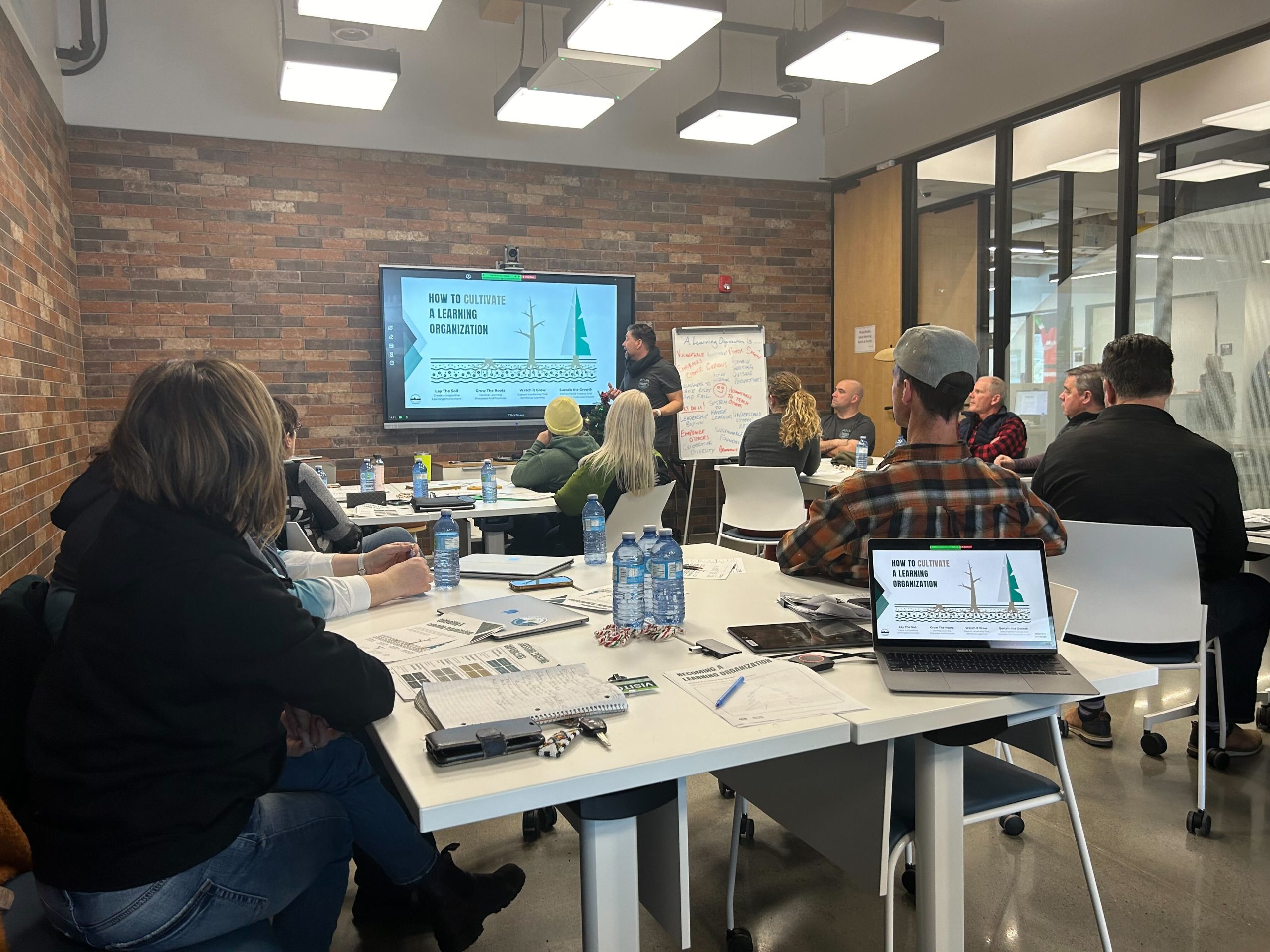
Innovation Workshops
In each workshop, participants work through their own ideas using a structured innovation process.
Find the Right WorkshopKey takeaways
Buy-in is built while a change is being shaped, not sold after it is decided.
Change is better when it happens with people than when it happens to them.
Name what people will lose beside what the organization will gain.
Give the old way an end date and the new way an owner.
Judge buy-in by what people do at 30 and 90 days, not by agreement at the launch.
Why Employee Buy-In for Change Breaks Down

Definition
Employee buy-in for change
The point at which the people a change affects understand why it is happening, have had a hand in shaping it, and choose the new way over the old one when no one is checking.
Most change reaches employees as an announcement. Leaders decide, a plan is drawn up, and only then does the work of getting employee buy-in for change begin: a town hall, an email, a list of benefits. By then the decision is made, and the people who will live with it are asked to agree with something they had no part in. This article explains how to get employee buy-in for change by turning that order around.
That order is the problem. People rarely resist change as such. They resist change that is done to them. Shannon Phillips, co-founder of Unbounded Thinking, makes the point to every audience he speaks to:

Change is better when it happens with you versus to you.
Shannon Phillips, Co-Founder and Innovation Strategist
Unbounded Thinking defines innovation as a way to systematically harness collective intelligence to navigate change, and Shannon calls navigating change the most important part of that definition. Doing it well means including as many people as possible, as early as possible.
When buy-in is missing, the cost shows after the launch. The new system runs beside the old spreadsheet. The new process is followed while a manager is watching. In our training we call this the Innovation Gap: an idea can succeed technically and still fail, because people did not adopt it.
Key idea
The difference between an idea and an innovation is adoption. If you don’t manage the transition, you haven’t innovated. You’ve only experimented.
Shape the Change With People, Not for Them
Buy-in is built while the change is still being shaped, when what people say can still alter the plan. Input requested after the plan is final is consultation in name only, and employees can tell the difference.
Instead of
Announce the decision, then list the benefits
Ask a change champion to sell the plan
Treat questions as resistance
Train everyone on launch day
Try this
Ask the people affected to describe the problem first
Put people from the teams that will use it on the design
Treat questions as news about weak spots in the plan
Let a few people try it early and adjust it on what they find
This does not turn every decision into a vote. Leaders still decide what must change and why. What people shape is how: the steps, the timing, the tools and what happens to the work the change replaces. The people closest to the work usually know where a plan will break, and they will say so if they are asked before the launch.
As Shannon puts it, “your best asset to help navigate change is and always will be people.” A plan that uses that asset before the launch needs far less persuasion after it.
Name What People Will Lose
Most change plans list what the organization gains. Few list what employees lose, and much of the resistance starts there. In our change workshops, the plan for every new idea answers a plain question: what will people give up when this goes live?
Skill and standing. The person who knew the old system best is a beginner on the new one.
Routine. A way of working built over years stops on a set date.
Control. A decision people used to make for themselves is now set by a process or a tool.
Time. For the first weeks the new way is slower, while the targets stay the same.
Relationships. A team is reorganized, or a regular contact is replaced by a system.
Paul Strebel made a related point in his 1996 Harvard Business Review article, “Why Do Employees Resist Change?”: employees hold unwritten agreements with their organization, which he called personal compacts, and a change rewrites them whether or not anyone says so. Naming a loss aloud does not remove it. It does tell people that leaders have thought about them, and not only about the plan.

In practice. Write the losses next to the benefits on the same page of the change plan, and say both at the first meeting. A plan that admits a cost is easier to believe.
How to Get Employee Buy-In for Change: Six Steps
The steps below follow the order we use when an organization plans a change: everyone it touches first, then how it fits the work, then how the old way ends. They apply to a new system, a new process or a reorganization.
1
Map everyone the change touches
List every group inside and outside the organization that the change affects: the people who will use it, approve it, support it or lose something to it. Most plans miss at least one group, and that group becomes the resistance.
2
Ask before you announce
Bring a few people from each affected group into the design while it can still change. Ask what problem they see, what would make the change work for them and where they expect it to break.
3
Name what people will lose
Write the losses beside the benefits and say both aloud. Plan what helps: training time, a lighter target for the first weeks, a role for the person who knew the old way best.
4
Explain the why in their terms
Each person wants four answers: why this is happening, what changes for them, what stays the same and when. Managers should be able to give those answers in their own words, in person, before any email goes out.
5
Set an end date for the old way
Agree the date the old process stops and who owns the new one. Without an end date, people run both and fall back on the old way when they are under pressure.
6
Come back on a set date
Agree in advance when you will check whether people are using the change and what it has delivered, for example at 30 and 90 days. Then act on what you find.
Steps 1 to 3 happen before anyone outside the planning group hears about the change. Most organizations skip them, and they are the steps that decide buy-in.
How to Communicate Change to Employees
Communication cannot create buy-in that the first three steps did not build, but poor communication can lose it. Three rules help.
Who
The Manager People Already Trust
People take news about their own work from the manager they report to. Brief managers first, answer their questions, then let them tell their teams in person.
What
The Reason Before the Plan
Start with the problem the change solves, in the words the team uses. Then say what changes for them, what stays the same and the date.
After
A Way to Answer Back
Give people one place to raise problems with the change, and reply to every one. A question that disappears tells people the change is closed to them.
Replying to every question matters for the same reason it matters with employee ideas: people stop speaking up when what they say disappears. Our article on how to respond to employee ideas sets out a process that gives every idea an answer.
How to Tell Whether People Have Bought In
Buy-in shows in what people do, not in what they say at the launch meeting. Look for these signs at 30 and 90 days:
People use the new way when no one is checking.
Use of the old way stops after its end date.
Questions change from why to how.
People suggest improvements to the new way.
Managers explain the change in their own words.
Workarounds are reported rather than hidden.
If the signs are missing, go back to the people affected and ask what is in the way. The answer is usually a loss nobody named or a step the plan did not allow time for. Our article on why pilot projects do not scale covers the same problem when a change moves from one team to the rest of the organization.
Buy-In Comes Easier When People Are Asked Every Week
A large change is hardest in an organization where it is the first time people are asked for their view. Where employees share ideas every week, see each one answered and see some of them used, a large change is one more thing they help to shape.
That is the case for a steady habit of small improvements. Shannon advises organizations to start with core innovation, the small changes to how work is done today, because it is low risk, low investment and involves the most people. Each small change people make themselves builds the trust that a large change will need. At work, in his words, people want to “feel purpose” and to “feel heard.”

Workshops and Certification
Innovation Workshops
In each workshop, participants work through their own ideas using a structured innovation process.
Employee Buy-In for Change: A Checklist Before Launch
Before a change is announced to everyone, check that each of these is true.
Before launch
Every affected group is on the map, including those who lose something.
People from each group helped shape the plan.
The losses are written beside the benefits.
Managers can explain why, what changes, what stays and when.
The old way has an end date and the new way has an owner.
A date is set to check use at 30 and 90 days.
If any item is missing, the launch can wait a week. A week spent with the people affected costs far less than months of a new system that nobody uses.
Frequently Asked Questions
How do you get employee buy-in for change?
Involve the people affected before the plan is final. Map everyone the change touches, ask a few people from each group to help shape it, name what they will lose, explain why in their terms, set an end date for the old way and check use at 30 and 90 days.
Why do employees resist change?
Most resistance comes from change done to people rather than with them, and from losses nobody named: skill, routine, control, time or relationships. People also resist when they do not understand why a change is happening.
What is the difference between buy-in and compliance?
Compliance is following the new way while someone is checking. Buy-in is choosing the new way when no one is checking, because you understand why it matters and had a say in how it works.
How do you communicate change to employees?
Brief managers first, then let them tell their teams in person. Start with the problem the change solves, then say what changes, what stays the same and when. Give people one place to raise problems and answer every one.
Who should be involved in planning a change?
A few people from every group the change affects: those who will use it, approve it, support it and lose something to it. The people closest to the work usually know where a plan will break.
How do you measure employee buy-in?
Watch behaviour at 30 and 90 days: use of the new way when no one is checking, use of the old way after its end date, the questions people ask and the improvements they suggest.
About the author

Shannon Phillips
Co-Founder and Innovation Strategist
Designs structured innovation systems for enterprise organizations and helps leadership teams set priorities that reflect how the organization operates.
Related Articles

Adoption and Change
Why Pilot Projects Do Not Scale: The Readiness of the Team That Receives Them

Psychological Safety
How to Respond to Employee Ideas So People Keep Sharing

Knowledge Hub