


In this article
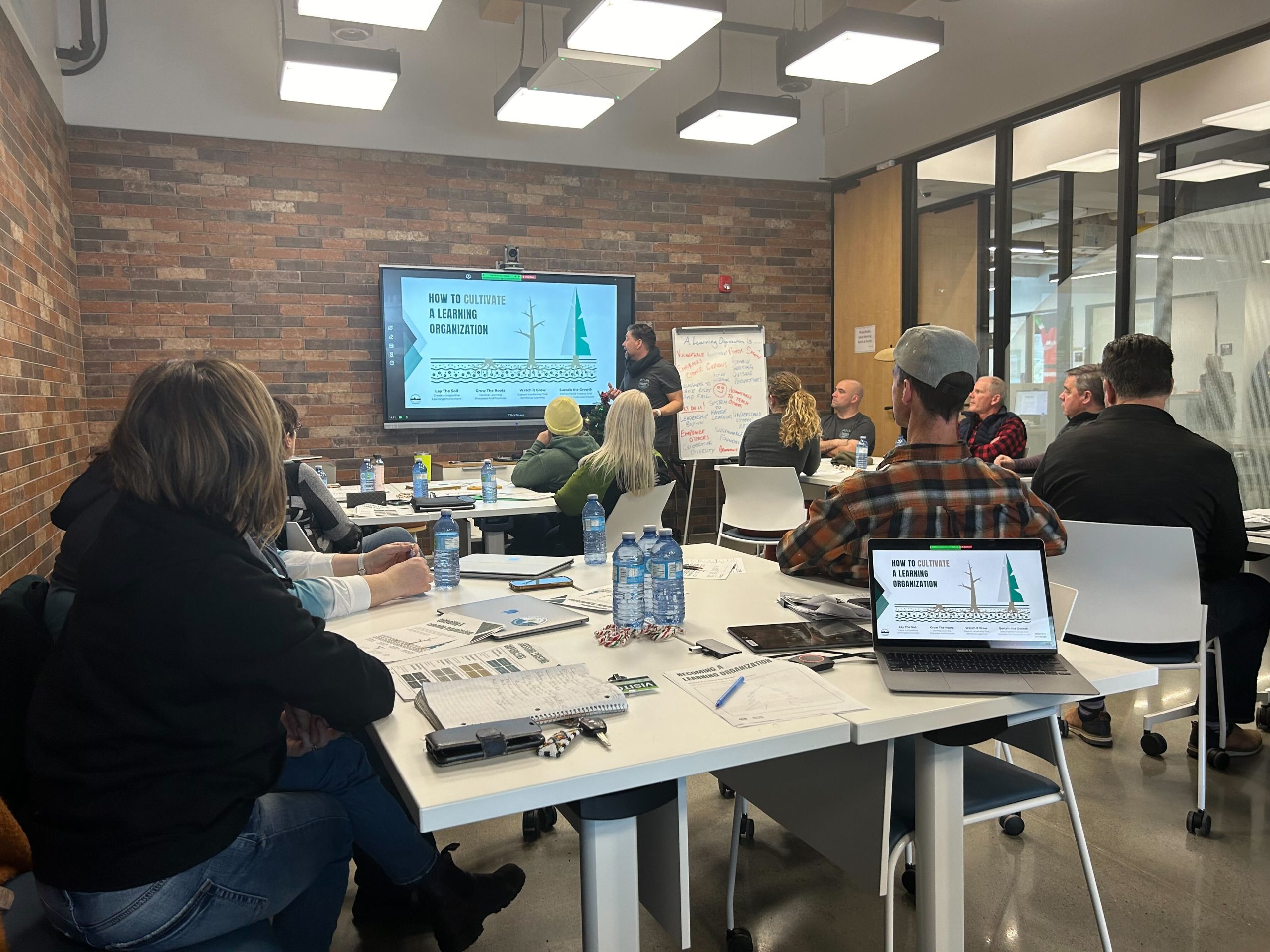
Innovation Workshops
In each workshop, participants work through their own ideas using a structured innovation process.
Find the Right WorkshopKey takeaways
Put every idea in one list within a week, with the name of the person who raised it.
Give each idea an owner: the person responsible for the next step.
Decide each idea against criteria agreed before anyone scores.
Tell every participant the outcome: going ahead, parked, or declined with a reason.
Review progress at 30 and 90 days, and use the results to plan the next session.
Why Most Ideas Stop When the Session Ends
Most teams know how to run a session but not what to do after brainstorming. A workshop or brainstorming session usually ends well. The walls are covered in notes, people leave with energy, and someone offers to type everything up. A month later, few of those ideas have moved, and the people who shared them have stopped asking.
The cause is rarely the quality of the ideas. It is what happens, or does not happen, in the weeks after the session. Three things are usually missing:
No owner. Everyone agreed the idea was good, so no one person is responsible for the next step.
No decision. Ideas wait in a list because there is no agreed way to say yes, not yet or no.
No answer. The people who raised the ideas never hear what happened to them, so they share less next time.
The gap is common. In BCG’s 2024 study, most companies called innovation a priority, and very few were ready to turn it into results:
83%
of companies see innovation as a top-three priority
3%
are ready to turn that priority into results
The steps below set out what to do after brainstorming. Each closes one of those gaps, and most of the work happens in the first week:
1
Capture
Every idea in one list

2
Own
A name beside each idea
3
Decide
Against agreed criteria
4
Tell
Every participant hears back
Week One: Capture Every Idea in One Place
Within a week, move every idea from the notes, photos, flip charts and chat messages into one list. The longer this waits, the more context is lost: a note that made sense in the room can be hard to read two weeks later.
1
Collect
Gather the notes, photos and chat messages from the session, including ideas raised in small groups.
2
Group
Combine duplicates and group ideas that solve the same problem, so the list shows the problems as well as the solutions.
3
Record
Keep the name of the person who raised each idea, so there is someone to ask and someone to tell.

In practice. Send the list to everyone who took part within two working days, with the date by which each idea will have a decision. A short email is enough; it does not need a slide deck.
Give Each Idea an Owner
The owner is the person responsible for the next step. The owner need not be the person who builds the idea, and is often not the person who raised it; the job is to keep the idea moving until it is decided.
Name owners in the first week, while the session is still fresh. An idea without an owner waits for someone to notice it, and in most organizations no one does. For a large session, one person can own several related ideas. What matters is that every idea on the list has a name beside it, and that each owner knows what is expected and by when.
Initiatives end. Systems compound.
Decide With Criteria Agreed in Advance
Agree the criteria before anyone scores an idea. When the criteria come first, every decision can be explained, and people accept a no more readily when they know how it was reached.
Keep the criteria few and plain. For example:
The idea addresses a problem that matters to the organization this year.
Its value can be checked with a small test.
Someone is willing to own it.
It does not depend on a decision outside the team's control.
Our method moves each idea through four stages, and each stage ends with a decision, so no idea is left waiting between steps:

Qualify
Decide whether an idea is worth pursuing: set the measure of success and check readiness.
Clarify
Find the underlying problem behind the symptom and frame it as a “How might we” question.

Ideate
Generate a wide range of possible solutions.

Explore
Test, refine and plan for adoption.

Workshops and Certification
Innovation Workshops
In each workshop, participants work through their own ideas using a structured innovation process.
Agree the First Small Test
For each idea that goes ahead, agree the smallest test that would show whether it works, and name the person who runs it. A small test makes it cheap to be wrong and quick to learn.
A good first test can run within a few weeks, with the people and budget the team already has. It answers one question, such as whether customers notice the change or whether a new step saves time, and it has a date by which the result will be known.
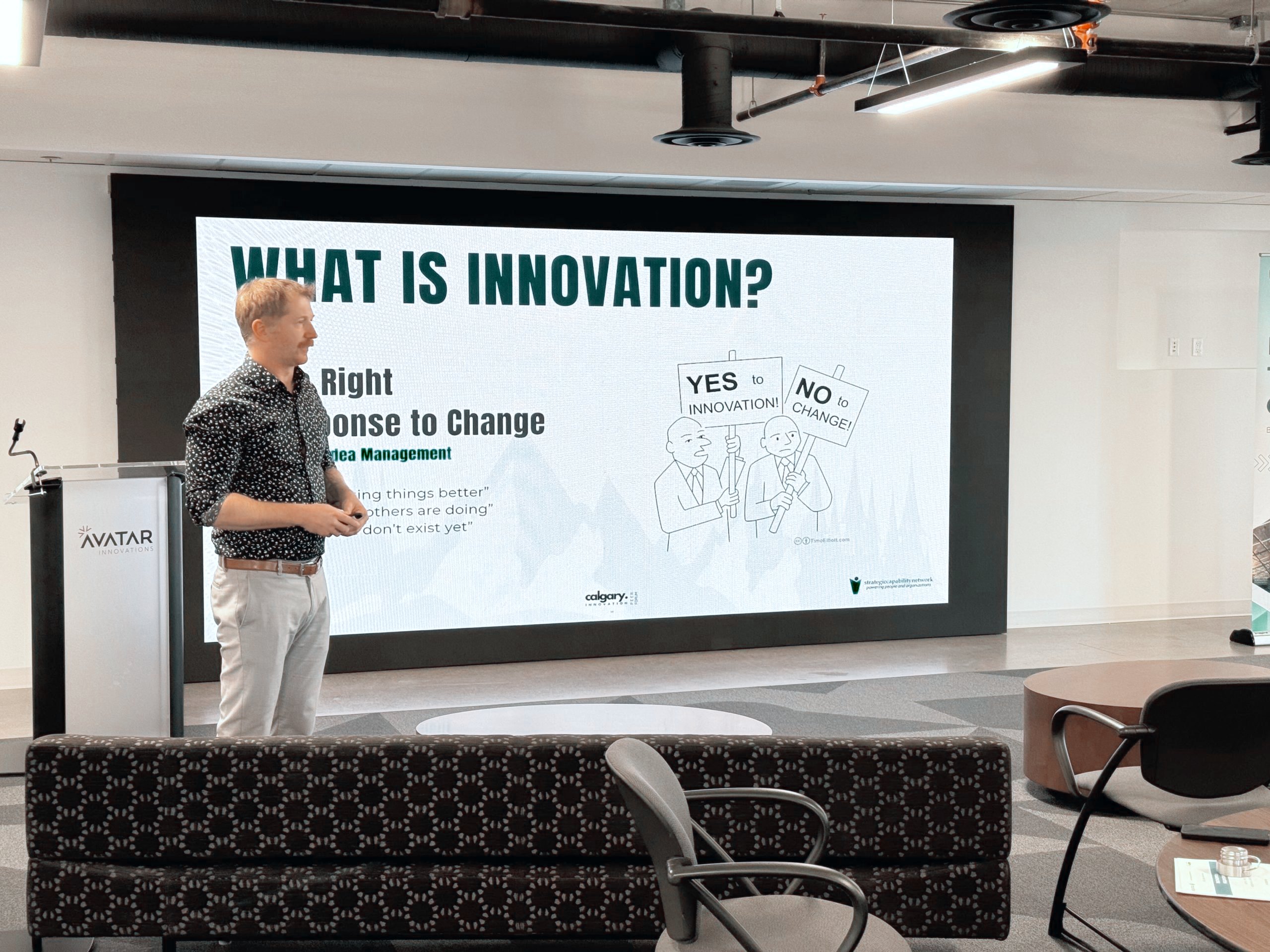
Shannon Phillips at an Unbounded Thinking workshop.
Tell Every Participant the Outcome
Every person who shared an idea hears one of three answers, each with a short reason:

Going ahead
The idea has an owner, a first test and a date for the result.

Parked
The idea is worth keeping, but not now. The reason is given, with the date it will be looked at again.

Declined
The idea will not go ahead. The reason is given, so the person can see how the decision was made.
A visible answer is what makes people share again at the next session. A declined idea with a clear reason does less harm than an idea that is never mentioned again.
Review Progress After 30 and 90 Days
Book two short reviews before the session ends, so they are in calendars before other work fills them.
Week 1
One List and Owners
Every idea captured, grouped and given an owner, and the list sent to all participants.
Day 30
Decisions Made
Every idea decided against the agreed criteria, and every participant told the outcome.
Day 90
First Results
The first tests have run. Decide which ideas to scale, change or stop.
The 90-day review is also the time to look back at the session itself: how many ideas were decided, how many tests ran, and what the organization learned. Those results make the case for the next session, and they show participants that their time was well spent.
Before the session ends
Every idea is on one list, with the name of the person who raised it
Each idea has an owner
The criteria for deciding are agreed
Participants know when they will hear back
The 30-day and 90-day reviews are in the calendar
Limited-time Q4 offer
Innovation Process Certification at 50% Off
Your team can build this on a real problem in our two-day Innovation Process Certification, for up to 10 people. Alberta organizations that book by 30 November pay half our medium business price.
Frequently Asked Questions
What to do after brainstorming?
Within a week, put every idea in one list, give each one an owner, decide it against criteria agreed in advance, and tell every participant the outcome. Then review progress at 30 and 90 days.
What comes after the ideation phase?
Selection and testing. Each idea is decided against agreed criteria, and the ideas that go ahead start with a small test run by a named person, with a date for the result.
How do you prioritize ideas from a brainstorming session?
Agree a few plain criteria before anyone scores, score each idea against them, and record the reason for each decision so it can be explained to the person who raised it.
How do you follow up after a workshop?
Within a week, send each participant the list of ideas, the owner of each one and the date of the first decisions. At 30 and 90 days, report what was decided and what the tests showed.
How do you organize brainstorming ideas?
Within a week, move every idea into one list. Combine duplicates, group the ideas that solve the same problem, and record who raised each one, so there is someone to ask and someone to tell.
How do you evaluate innovation ideas?
Score each idea against a few plain criteria agreed in advance: the problem matters to the organization this year, its value can be checked with a small test, someone is willing to own it, and it does not depend on a decision outside the team's control. An idea that meets them starts with a small test, a named owner and a date for the result.
About the author

Shannon Phillips
Co-Founder and Innovation Strategist
Designs structured innovation systems for enterprise organizations and helps leadership teams set priorities that reflect how the organization operates.
Related Articles


Foundations
What Is Innovation Readiness
Foundations